58 PRs, 572k lines: reviews in the in-between times
AI factories are coming. Most teams still hand the output to a human. I reviewed 58 PRs last week. Here's what I'm doing about that.
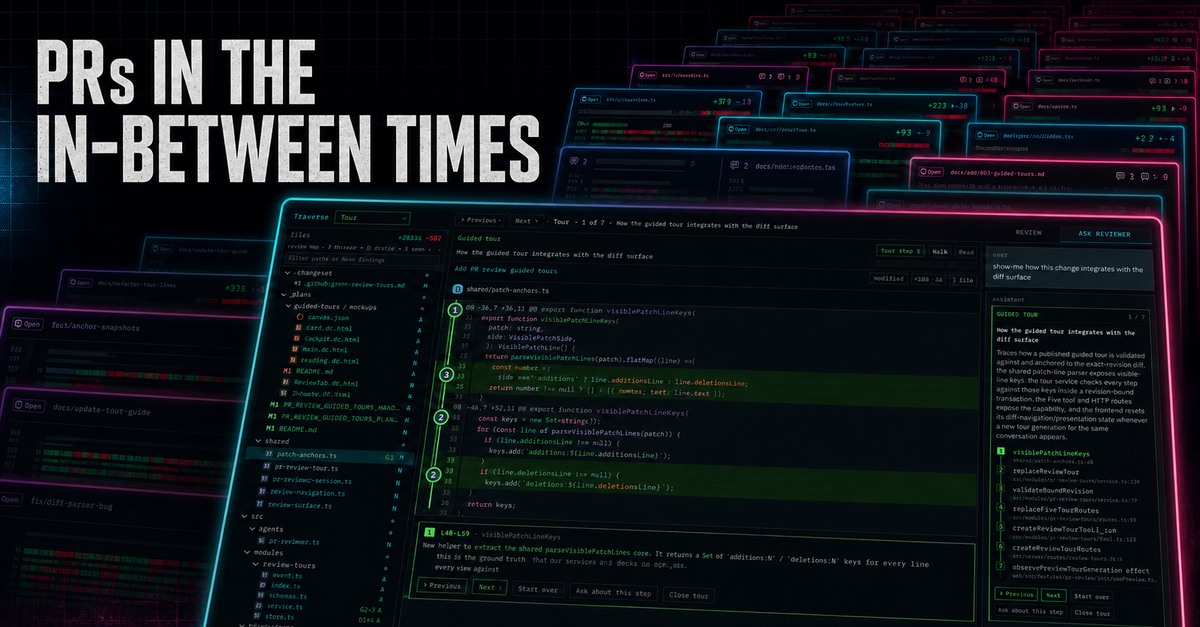
There’s a lot of talk on X and LinkedIn about whether people should still review code. Right now, I think we’re kind of in the “in-between times.” AI factory patterns are coming, but safe, full-lifecycle ones aren’t here yet for most devs.
Today, for a lot of folks, things are more pull-request-sweatshop-shaped. Here’s what I mean. This week was an on-call rotation for me, so it was a bit of a weird one. But I still reviewed 58 PRs—about 572k changed lines—from my two coworkers.
- Average changed lines: 9,874
- Median changed lines: 399
- Average files: 40.1
Wanna guess how many of those lines I actually reviewed? Not enough of the ones that matter, and too many of the ones that didn’t.
Devs might be setting up homegrown factory patterns with their agents, but because we don’t have full-lifecycle factory setups, there’s a hitch. There’s a transition point where the workload shifts from your factory onto a coworker: review.
Most folks don’t yet have full factories that cover the full lifecycle, including deploys. Letting a bad implementation ship to prod will fuck up your day, and for a long time we’ve used reviews to try to prevent that.
PR volume is going up. Line counts are increasing. Model costs are dropping. But in a lot of orgs, you still have to have a second human sign off on the PR. Which, to be fair, is probably not a terrible idea, because both agents and their human wranglers still occasionally ship slop or have just straight-up bad implementation takes.
The PR volume isn’t really the problem.
Reviews just haven’t evolved. The best we’ve got is “AI code review bots.” Useful as another pass, I guess. But honestly, you could have just fucking run another round of reviews locally with black-box subagents and gotten a similar result, probably in less time.
So what’s a dev to do? Just blindly hit approve on every PR? Nah.
Vibe-code the change ya wanna see. Scratch your own itch. If the tool you use or the process you do every day is annoying, you can just go fucking make a better one for yourself now. Workflow tools are a pretty good target for this. They’re so low-stakes.
That’s what I’ve been doing. I vibed myself a better process and UX: neondeck.dev | GitHub.
It does three things to help me burn down my review backlogs:
- PRs get triaged. If it’s a small change or evaluated as low risk, the agent flags it for stamping. SOC2 fanboys and purists, avert your eyes and cover your ears. I approve a big chunk of PRs without ever looking at the code.
- For bigger PRs, it has a fast af local diff viewer thanks to the @pierre/diffs package. I can leave comments, approve, or request changes without ever opening GitHub.
- Maybe most useful, I can ask the in-PR agent something like, “Show me where this lock is acquired and released,” and it walks me through the answer step by step, with line-level notes in the diff. On a gnarly PR, the kind a human should actually review, I can work through it pretty quickly.
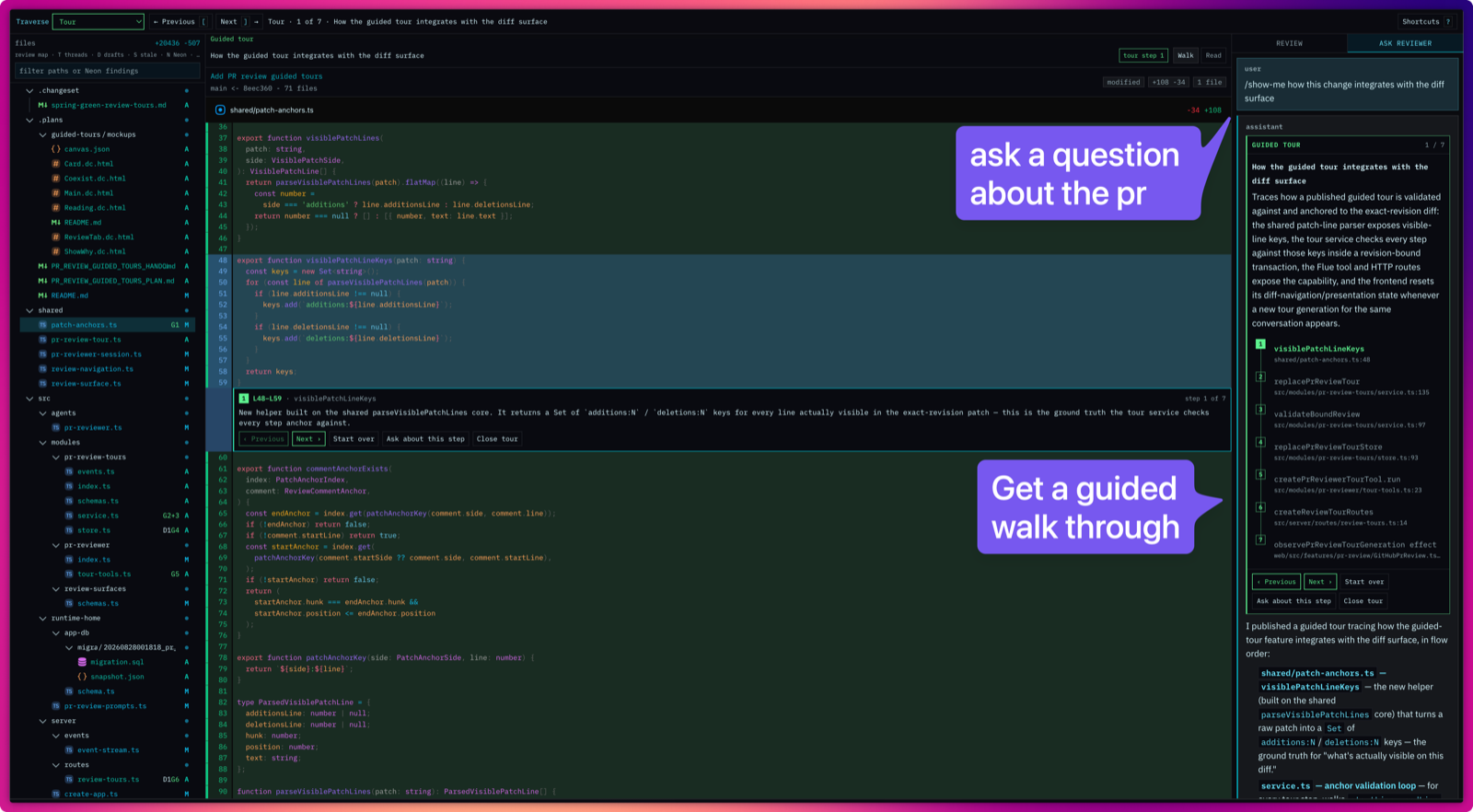
Neondeck can turn a question about a PR into a guided, line-level walkthrough.
Volume is going to keep climbing, and reviews as we know them will probably go away. But for at least a little bit longer, a lot of folks will be stuck with them. I’m not waiting around for the review process, or orgs, to catch up on their own. Ain’t nobody got time for that.